
Why an Emergency Fund is Crucial for Tax Planning
Do you worry about unexpected expenses messing up your tax planning? Emergencies like job loss or health issues can take a toll on your savings. With an emergency fund, you can avoid dipping into retirement accounts and facing hefty taxes. 1 Keep reading to learn more….
Key Takeaways
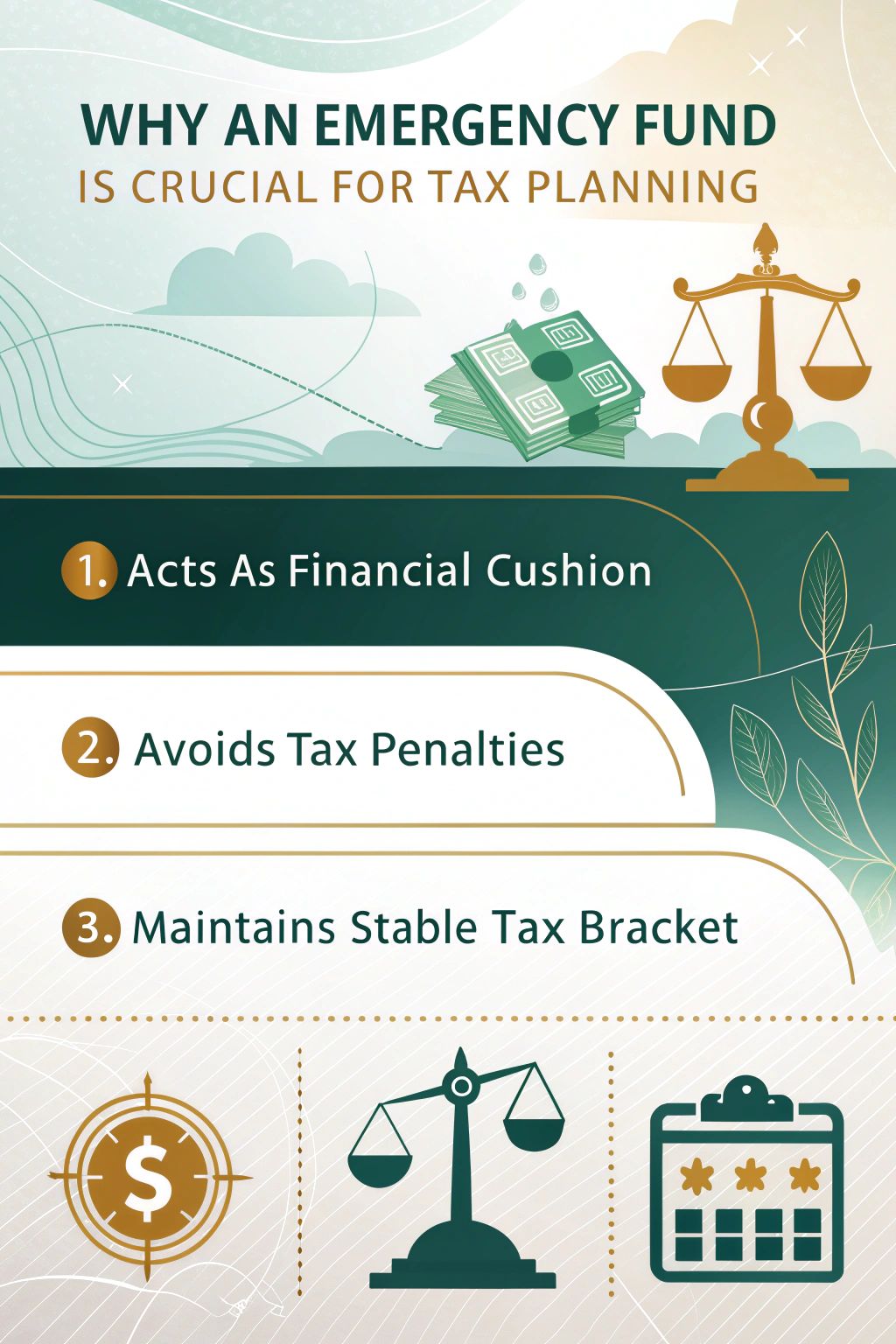
- Financial Safety Net: An emergency fund acts as a financial cushion. It helps cover unexpected costs like car repairs or medical bills without stress.
- Tax Penalty Avoidance: Having an emergency fund prevents you from taking money early from retirement accounts, avoiding hefty penalties and taxes.
- Stable Tax Bracket: Emergency savings help keep your tax bracket steady during tough times by not touching retirement funds early.
- Optimal Fund Size: Experts recommend saving three to six months of living costs. Some suggest even more, depending on family needs.
- Special Rules & Benefits: New legislation allows penalty-free withdrawals for emergencies starting in 2024, adding flexibility for managing unexpected expenses.
Understanding Emergency Funds
Emergency funds act as a financial safety net. They help you cover unexpected costs without stress.
Definition and purpose
An emergency fund is money you save for unexpected expenses. Think of it as a financial cushion or safety net. It helps you handle unforeseen expenses without stress. Examples include sudden car repairs or medical bills. 2
The purpose of this cash reserve is to give you short-term stability and financial security during crises. Experts suggest saving three to six months’ worth of living costs in such a fund.
Keep these funds in liquid savings accounts, like high-yield savings accounts, so they are easy to access when needed. 1
Ideal size of the fund
To set up an emergency fund, think about how much to save. Experts say you should have three to six months of living costs saved.4 This helps cover rent, food, and other bills if something goes wrong.
The OJK suggests saving even more. They recommend putting aside 6 to 12 times your monthly spending.3 It depends on how many people rely on you and what you spend each month. These savings act as a financial safety net for unexpected expenses…
like sudden car repairs or medical bills!
Importance for Tax Planning
An emergency fund helps you avoid unnecessary expenses, like penalties or taxes on early withdrawals from savings accounts. It also keeps your income stable during tough times… ensuring you stay in control of your money!
Avoiding early withdrawal penalties from retirement accounts
Taking money early from retirement accounts can be costly. SECURE 2.0 Act helps avoid the 10% penalty starting in 2024. This change will make a big difference for many Canadians. 5
Special rules allow you to take out money without penalties for emergencies and domestic abuse. Emergency expense distributions are limited to once a year, up to $1,000. You can put this money back into the account within three years with no taxes…
nice! 6
Planning smartly helps you save more in the long run.
Domestic abuse victims can withdraw up to $10,000 or 50% of their account balance without penalty. This amount adjusts for inflation each year.
Maintaining tax bracket during financial emergencies
Emergency savings accounts (ESAs) help keep your tax bracket steady. 7 In hard times, you might need extra cash quickly. An ESA acts as a cushion so you do not touch your retirement funds early.
This saves you from penalties and higher taxes.
Roth retirement accounts also offer a way to manage emergencies without changing your tax bracket. You can withdraw contributions tax-free anytime. Health Savings Accounts (HSAs) add another layer of safety with three tax benefits: no taxes when you put money in, grow it, or take it out for medical costs.
Next up… how all this ties into the bigger picture of Tax Planning!
Conclusion
An emergency fund is like a safety net. It keeps you from making costly financial mistakes during hard times. By having this fund, you avoid high taxes and penalties on withdrawals.
Stay prepared… keep your finances safe!
For more insightful guidance on how to further optimise your tax situation through savings, kindly visit our comprehensive guide to savings plans and tax reduction.
FAQs
1. Why is an emergency fund important for tax planning?
An emergency fund helps cover unexpected expenses, so you don’t have to dip into money set aside for taxes. This ensures you can meet tax obligations without stress.
2. How does having an emergency fund aid in better financial management?
With an emergency fund, you avoid using funds meant for taxes when emergencies arise. This keeps your finances organised and prevents debt.
3. Can an emergency fund prevent penalties related to tax payments?
Yes, having a reserve means you’re less likely to miss tax deadlines due to unforeseen costs, thus avoiding late fees and penalties.
4. What are the benefits of setting up an emergency fund alongside other savings?
It provides peace of mind knowing that both your immediate needs and future tax liabilities are covered… helping maintain financial stability year-round.
References
- ^ https://www.investopedia.com/terms/e/emergency_fund.asp
- ^ https://www.consumerfinance.gov/an-essential-guide-to-building-an-emergency-fund/
- ^ https://www.researchgate.net/publication/268424813_Emergency_funds_and_alternative_forms_of_saving (2024-10-22)
- ^ https://www.moneyhelper.org.uk/en/savings/types-of-savings/emergency-savings-how-much-is-enough
- ^ https://us.beyondbullsandbears.com/2024/07/11/new-ways-to-avoid-early-withdrawal-penalties-from-retirement-accounts/ (2024-07-11)
- ^ https://frazerjames.co.uk/the-basics-of-early-retirement-a-comprehensive-guide/
- ^ https://www.securesave.com/blog/navigating-the-tax-landscape-the-tax-implications-of-emergency-savings-accounts


