
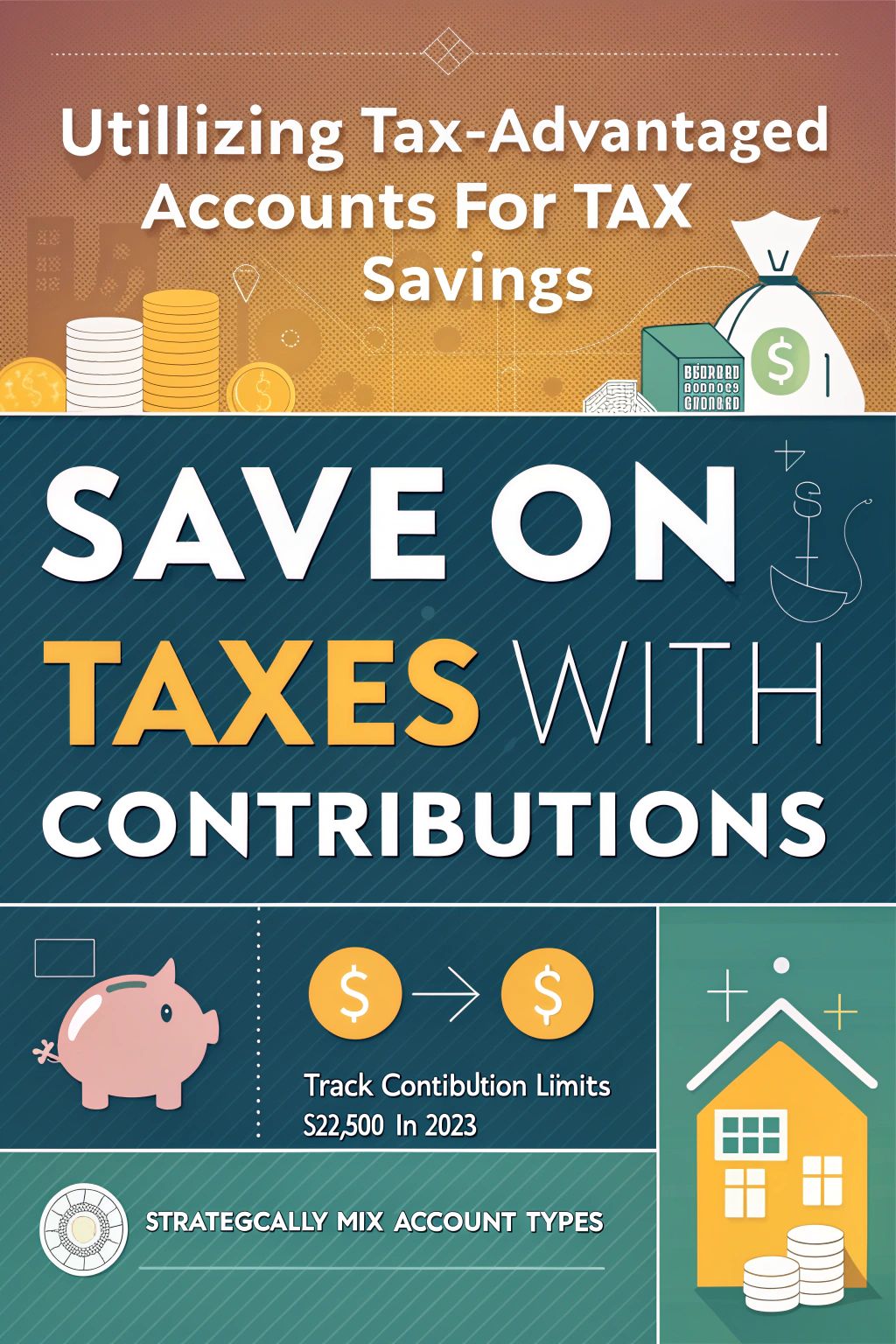
Utilizing Tax-Advantaged Accounts for Tax Savings
Do you want to save money on taxes? Using tax-advantaged accounts can help a lot. These special accounts offer many tax benefits, like growing your money without paying taxes right away. 2 In this article, you’ll learn how these accounts work and how they can boost your savings. 1 Keep reading!
Key Takeaways
- Save on Taxes: Tax-advantaged accounts help reduce your taxable income. Examples include Traditional and Roth 401(k)s, and HSAs. Contributions can lower taxes now or later.
- Retirement Benefits: Traditional retirement accounts offer tax-deferred growth. Roth accounts allow tax-free withdrawals in retirement. Know the rules for each to plan better.
- Health and Education Savings: HSAs provide triple tax benefits for medical costs. FSAs also reduce taxes but must be used yearly. 529 plans help save for education with after-tax contributions.
- Contribution Limits: Keep track of limits. For example, you can contribute $22,500 to a Traditional 401(k) in 2023, plus an extra $7,500 if over 50 years old.
- Strategic Planning: Mix different account types to balance current savings with future benefits. Consider both immediate deductions and long-term growth when saving money.
Understanding Tax-Advantaged Accounts
Tax-advantaged accounts help you save money by reducing taxes on your investments. They work differently from regular taxable accounts, offering unique benefits….
Definition and Purpose
Tax-advantaged accounts offer tax benefits to help you save money. They lower taxable income and let investments grow without paying taxes right away. 1
These accounts differ from taxable ones because of tax-free or tax-deferred earnings. Examples include retirement accounts like Traditional 401(k)s and Roth accounts, healthcare savings in HSAs, and education funds in 529 plans.
How They Differ from Taxable Accounts
Tax-advantaged accounts can save you money on taxes. 2 Taxable accounts do not offer these savings. In a taxable account, you pay taxes on earnings every year. This includes dividends and interest.
In tax-deferred accounts like Traditional 401(k) and Traditional individual retirement accounts, contributions are tax-deductible now. You pay taxes later when you withdraw the money.
Tax-exempt accounts like Roth individual retirement accounts use after-tax contributions, so withdrawals are tax-free in retirement. 2
Next up: Types of Tax-Advantaged Accounts…
Types of Tax-Advantaged Accounts
There are several kinds of tax-advantaged accounts you can use. Each one offers unique benefits and rules… making it easier to save money on taxes!
Retirement Accounts
Retirement accounts help you save money for the future. Major types include Traditional 401(k)s and Roth 401(k)s, which you can get through your employer. 3 Traditional retirement accounts let you deduct contributions from taxable income but require taxes when withdrawing in retirement.
Roth retirement accounts offer tax-free withdrawals when you retire since taxes are paid upfront.
The SECURE Act raised the age for Required Minimum Distributions (RMDs) to 72, and SECURE Act 2.0 now requires them at age 73 starting January 1, 2023. This means more time to grow savings without paying taxes on withdrawals…
Great news if you’re planning ahead! 3
Traditional 401(k)
Employees can save for retirement with a Traditional 401(k). They contribute pretax income, which lowers taxable earnings. This plan has a contribution limit of $22,500 in 2023. For those aged 50 and above, there is an extra $7,500 allowed. 4
Employers often match contributions—about 4.5% of salary on average. Withdrawals must start at age 73. Early withdrawals may face penalties.
Roth 401(k)
The Traditional 401(k) offers tax-deferred growth, but the Roth 401(k) works differently. You pay taxes on contributions upfront with after-tax dollars. 5
Withdrawals in retirement are tax-free if you are at least 59½ years old and have held the account for five years. The contribution limit is $23,000 for those under 50, and a $7,500 catch-up for those over 50 (2024). 5
Save now… enjoy later without extra taxes!
No income limits restrict participation. Starting in 2024, there are no required minimum distributions (RMDs). 6 This flexibility helps many workers plan better for retirement savings without worrying about forced withdrawals.
Traditional IRA
Unlike a Roth 401(k), a Traditional Individual Retirement Account lets you contribute pre-tax income. This means you get immediate tax deductions on contributions. 2 You pay taxes when you withdraw the money, usually in retirement.
It is classified as a tax-deferred investment account. 2
You must start Required Minimum Distributions (RMDs) at age 72… or age 73 if you turn 73 after January 1, 2023. A Traditional Individual Retirement Account helps with retirement planning by allowing deductible contributions and tax-deferred growth.
Consider it for your retirement savings strategy!
Roth IRA
A Roth savings account lets your savings grow tax-free. You use after-tax dollars to contribute. This means you pay taxes now, but later withdrawals are tax-free if you’re 59½ or older and meet other conditions.
For 2024 and 2025, the limit is $7,000 a year with an extra $1,000 catch-up for those aged 50 and over. 7
Single filers with a Modified Adjusted Gross Income (MAGI) over $161,000 can’t add money to a Roth savings account. Married couples filing together hit the cap at $240,000 MAGI. 7 Investments include mutual funds, stocks, bonds…
but not life insurance or collectibles! 8
Healthcare Accounts
Healthcare Accounts can save you money on medical costs. Health Savings Accounts (HSAs) let you put in tax-free contributions. You can use these funds for healthcare expenses now or later.
The best part? Funds in HSAs carry over each year—they never expire.
Flexible Spending Accounts (FSAs) also help cover health costs with pre-tax money. But, unlike HSAs, FSAs have a “use it or lose it” rule. Still, some plans offer a grace period of up to 2.5 months after the year ends.
### Education Accounts
Health Savings Accounts (HSAs)
Health Savings Accounts (HSAs) help Canadians save for medical expenses. Contributions are pre-tax, reducing your taxable income. In 2023, you can contribute up to $3,850 if you’re single or $7,750 if you have a family. 10
To open an HSA, enrol in a High Deductible Health Plan (HDHP). The money in your account stays with you even if you change jobs. Use funds tax-free for qualified medical costs like doctor visits and prescriptions. 10 It’s a smart way to manage healthcare costs!
Flexible Spending Accounts (FSAs)
Flexible Spending Accounts (FSAs) let employees save pretax funds for medical and dependent care expenses. For 2024, you can contribute up to £3,200 for medical costs and £5,000 for dependent care. 11 These accounts help reduce taxable income while covering qualified expenses.
Funds in FSAs must be used within the plan year but may have a grace period of up to 2.5 months. Unused money is lost at the end of this time. Therefore, it’s important to estimate needs carefully…
no one wants funds forfeited!
Education Accounts
529 College Savings Plans help you save for school costs. In Canada, contributions use after-tax money. Earnings grow tax-free if used for college expenses. From 2024, up to $35,000 can roll over to a Roth Savings Account. 8
Coverdell Education Savings Accounts (ESAs) also aid in saving. Contributions limit at $2,000 per child each year. These funds cover K-12 and college expenses alike. Both plans offer tax-advantaged ways to invest in education savings accounts! 3
529 College Savings Plans
A 529 College Savings Plan helps you save for higher education. 12 Use it to pay for college, K-12 tuition, and student loans. 12 You put in after-tax money, and withdrawals are tax-free at the federal level if used for qualified expenses.
You can even take out up to $10,000 per year for K-12 costs without paying extra taxes! It’s a great way to plan ahead and lower your tax bill.
### – Coverdell Education Savings Accounts (ESAs)
Coverdell Education Savings Accounts (ESAs)
Coverdell Education Savings Accounts (ESAs) allow you to save for your child’s education. You can contribute up to $2,000 per child each year. The money grows tax-free if used for education expenses.
ESAs offer flexible investment options compared to other plans. 13
Modified adjusted gross income (AGI) limits apply. Single filers stop getting benefits at $95,000 and married couples at $190,000. This means higher earners can’t use ESAs fully. These accounts help plan for college without heavy taxes…
a smart choice!
Benefits of Using Tax-Advantaged Accounts
Tax-advantaged accounts help you save money on taxes. They offer special benefits that can boost your savings… making them a smart choice for many Canadians.
Tax-Free or Tax-Deferred Growth
Investments in tax-deferred accounts grow without immediate taxes. You pay taxes only when you take money out. For example, traditional 401(k) and certain retirement accounts offer this benefit.
This results in more growth over time as the investments are not reduced by yearly tax. 2
Tax-free accounts like Roth retirement accounts work differently. Contributions do not get an initial tax deduction, but withdrawals in retirement are tax-free. This means you don’t owe any taxes on either your contributions or the investment growth…
ever! Both types help maximise your savings for the future while cutting current or future tax bills. 14
Potential for Deductible Contributions
Contributions to Traditional Individual Retirement Accounts offer immediate tax deductions. This means you can lower your taxable income right away, leading to savings on your current taxes.
For example, if you are employed and make a $5,000 contribution, that amount is deducted from your taxable income. 3
Health Savings Accounts provide another way to save on taxes. Contributions made to HSAs are tax-deductible when used for medical expenses. This helps reduce the overall cost of healthcare while giving you the benefit of saving money on taxes.
Tax-Free Withdrawals in Certain Conditions
Tax-free withdrawals can be a big advantage of tax-advantaged accounts. Roth retirement accounts, for example, offer tax-free withdrawals at retirement if you follow the rules. You must be 59½ years old and have held the account for at least five years. 2
HSAs provide another way to take out money without paying taxes. Use these funds for qualified medical expenses. This includes things like doctor visits, prescriptions, and even glasses.
529 plans help with education costs—tax-free! You can use these funds to pay for school fees or books. It makes saving for college easier and less costly over time….
Integrating Insurance Strategies for Enhanced Tax Efficiency
Insurance can help you save on taxes. Life insurance, for example, lets your money grow without paying tax until withdrawal. You can also use it to leave a tax-free benefit to loved ones. 14
Another way is using health insurance like Health Savings Accounts (HSAs). In Canada, they give you tax breaks and help cover medical costs. This keeps more of your money in your pocket while caring for your health needs.
Incorporating these strategies makes both tax and wealth management easier. 15
Common Misconceptions About Tax-Advantaged Accounts
Many people have wrong ideas about tax-advantaged accounts… discover the truth and unlock their full benefits!
Limits on Contributions
Individual retirement accounts have a limit. In 2025, you can put in $7,000. If you are over 50, the limit is $8,000. For 401(k) plans, it’s higher. You can save up to $23,500 in 2025.
People over 50 can save up to $30,500.
There’s also a combined cap for employee and employer contributions to 401(k) plans… This cannot go beyond $70,000 but rises to $77,500 with catch-up contributions. Understanding these limits helps…
### Withdrawal Regulations
Withdrawal Regulations
Withdrawal regulations can be tricky. For example, Roth accounts allow tax-free withdrawals after five years. 16 But you need to meet some rules to get this benefit. Traditional accounts defer taxes until you withdraw the money.
HSAs (Health Savings Accounts) and FSAs (Flexible Spending Accounts) have different rules. HSAs let funds roll over every year. This means you do not lose unused funds. FSAs usually don’t allow funds to roll over yearly.
Next up: Eligibility Requirements…
Eligibility Requirements
Not everyone can use tax-advantaged accounts. Roth accounts have income limits. If you earn too much, you can’t put money in them. Traditional accounts depend on how much you make and your filing status for deductions.
HSAs need you to have a high-deductible health plan first. 529 plans do not care about income levels, but they might face state gift tax rules if contributions are too high. Always check the specific rules before planning your savings! 3
Strategic Use of Tax-Advantaged Accounts for Optimal Benefits
Use tax-advantaged accounts wisely to maximise your savings. Balance between different account types for the best results… tailored to your goals!
Balancing Between Different Account Types
Balancing between different account types can help you save on taxes. It’s important to choose the right accounts for your savings.
- Use Traditional Accounts for Current Tax Savings
- Traditional retirement accounts and 401(k)s allow you to deduct contributions now.
- This reduces your taxable income today. 14
- You pay taxes when you withdraw in retirement.
- Pick Roth Accounts for Future Tax-Free Withdrawals
- Roth retirement accounts and 401(k)s do not give current tax breaks.
- But, withdrawals are tax-free after age 59½.
- This is great if you expect a higher tax rate in retirement.
- Combine Both Account Types
- Mix traditional and Roth accounts for flexibility.
- Having both lets you manage taxable income in retirement better.
- Allocate High-Growth Investments in Tax-Advantaged Accounts
- Place stocks or high-growth funds in your accounts like RRSPs or RESPs.
- This maximises tax savings since these grow faster.
- Use Healthcare Accounts Wisely
- HSAs provide triple tax benefits: deductible contributions, tax-free growth, and withdrawals for medical expenses.
- FSAs also allow pre-tax contributions but must be spent annually.
- Limit Contributions Strategically
- Know the annual limits: $6,000 for retirement accounts, up to $20,500 for 401(k)s as of 2023. 14
- Max out contributions to gain full benefits.
- Plan with After-Tax Returns in Mind
- Consider how much you keep after taxes when choosing where to invest.
- After-tax returns should guide your investment choices within these accounts.
- Don’t Forget Education Accounts
- Save for future education costs using RESP or other plans.
These accounts grow tax-free and provide grants or tax credits.
- Save for future education costs using RESP or other plans.
Balancing these accounts helps maximise your tax savings and increase your spending power later on… making every dollar count more!
Considerations Based on Financial Goals and Retirement Planning
Planning for retirement can feel like a big task. But, starting early and using tax-advantaged accounts can make it easier. 17
- Assess Current Financial Status
Know your income, expenses, and debts. This helps in setting realistic goals.
- Identify Long-Term Goals
Plan for how you want to live when you retire. Think about costs like housing and healthcare. 17
- Choose the Right Accounts
Think about Traditional vs Roth retirement savings plans. Each has different tax benefits.
- Start Early for Compound Growth
The sooner you start saving, the more time your money has to grow.
- Contribution Limits Matter
Check the limits for each type of account. For example, $6,000 per year for retirement savings plans (as of 2023).
- Review and Adjust Regularly
Life changes. Update your plan yearly to keep it relevant.
- Consider Diversified Investments
Spread your money across different types of assets to reduce risk.
- Look at Tax-Free Withdrawals Options
Roth accounts allow withdrawals without taxes if conditions are met.
- Factor in Inflation
Costs will go up over time due to inflation. Save enough to cover future expenses.
- Think About Estate Planning
Plan how your wealth will be passed on after retirement. This ensures financial security for loved ones.
Tax-efficient accounts help with retirement savings. Use them wisely based on your financial goals and needs. Follow these steps to build a strong plan for retirement success in Canada.
Conclusion
Tax-advantaged accounts are a smart way to save money. They offer tax breaks and can help you reach big goals like retirement or college. Using them well can mean more money in your pocket.
Start now, and let your savings grow!
For further insights on how insurance strategies can complement your tax planning, visit our detailed guide here.
FAQs
1. What are tax-advantaged accounts?
Tax-advantaged accounts help you save money on taxes. Examples include ISAs, pensions, and Junior ISAs.
2. How do tax-advantaged accounts provide tax savings?
These accounts offer benefits like tax-free growth or reduced taxable income. This means you keep more of your money.
3. Are there limits to how much I can contribute to these accounts?
Yes, each account has its own limit. For example, the ISA limit is £20,000 per year.
4. Can anyone open a tax-advantaged account?
Most people can open these accounts if they meet basic requirements like age and residency status in the UK.
References
- ^ https://www.experian.com/blogs/ask-experian/what-is-tax-advantaged-account/
- ^ https://www.investopedia.com/terms/t/tax-advantaged.asp
- ^ https://crsreports.congress.gov/product/pdf/R/R47492 (2023-03-31)
- ^ https://www.investopedia.com/terms/1/401kplan.asp
- ^ https://www.investopedia.com/terms/r/roth401k.asp
- ^ https://www.urban.org/sites/default/files/publication/50191/1000868-An-Analysis-of-the-Roth–k-.PDF
- ^ https://www.investopedia.com/terms/r/rothira.asp
- ^ https://www.wsj.com/buyside/personal-finance/taxes/tax-advantaged-account
- ^ https://pnfp.com/learning-center/personal-finance/health-and-benefits/understanding-tax-advantaged-healthcare-accounts/
- ^ https://www.healthcare.gov/glossary/health-savings-account-hsa
- ^ https://www.investopedia.com/terms/f/flexiblespendingaccount.asp
- ^ https://www.savingforcollege.com/intro-to-529s/what-is-a-529-plan
- ^ https://www.schwab.com/learn/story/saving-college-coverdell-education-savings-accounts
- ^ https://www.investopedia.com/articles/stocks/11/intro-tax-efficient-investing.asp
- ^ https://www.shma.co.uk/our-thoughts/tax-planning-guide/
- ^ https://crsreports.congress.gov/product/pdf/R/R46635/3
- ^ https://www.investopedia.com/terms/r/retirement-planning.asp


