
Maximize Tax Savings: Claim Every Deduction & Credit
Do you want to save money on your taxes? Tax deductions in Canada can help! Did you know there are over 400 deductions and credits available? 1 This blog will show you how to claim every deduction and credit. 2 Read on to learn more! 3
Key Takeaways
- Understand Deductions and Credits: Tax deductions lower your taxable income. Tax credits cut your tax bill directly.
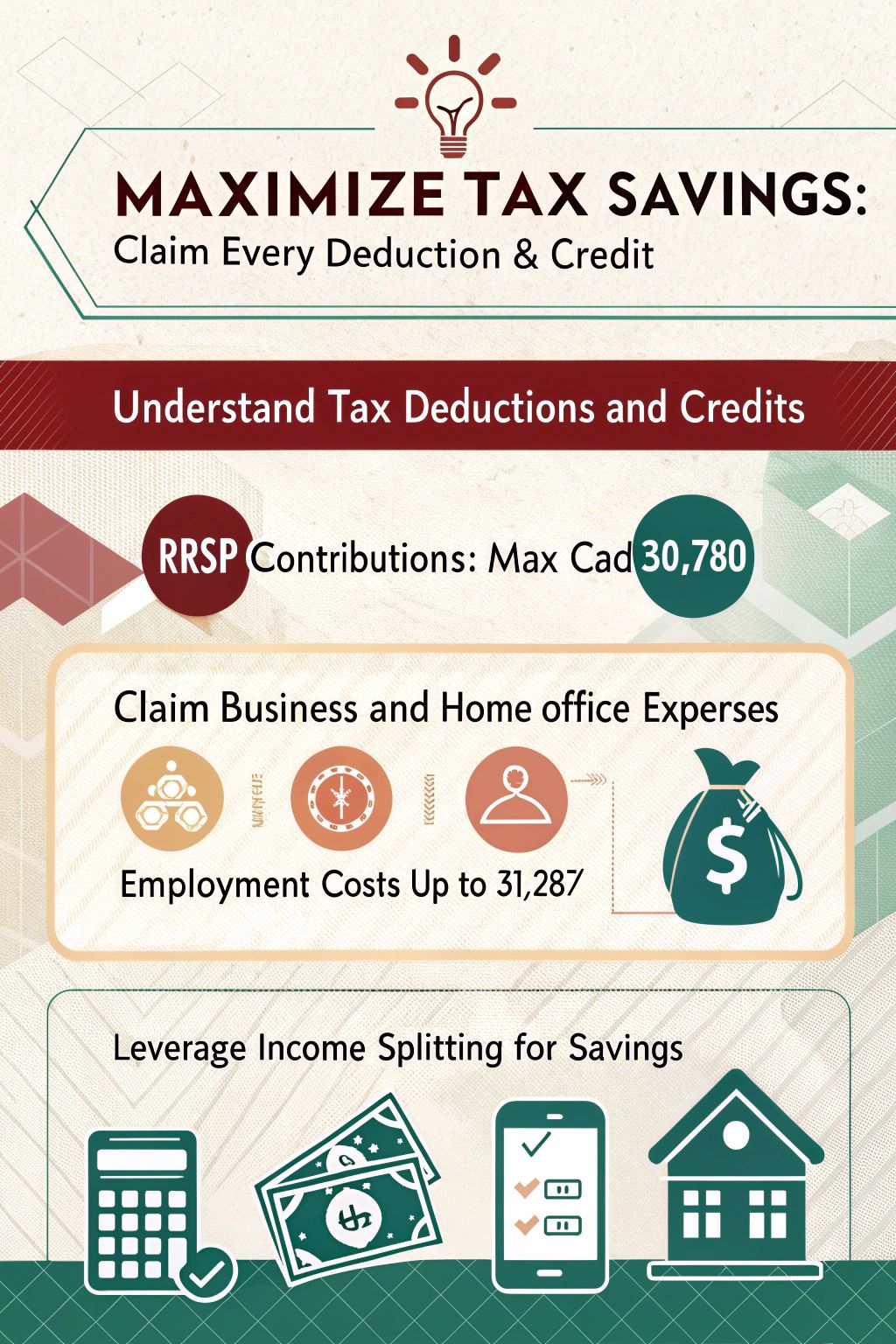
- RRSP Contributions: You can contribute up to 18% of earned income to an RRSP. The limit for 2023 is CAD 30,780.
- Business Expenses: Self-employed people can claim expenses like office supplies. Home office use also counts if used for work.
- Employment Costs: Claim Canada Employment Amount up to $1,287 in 2023. Tools for tradespeople can be deducted up to $1,000.
- Income Splitting: High earners should transfer income within the family. This reduces the overall tax paid by using different tax brackets.
Understanding Tax Deductions and Credits
Tax deductions and credits can save you a lot of money. They reduce your taxable income, sometimes significantly… There’s more to it than simply filling out forms – let’s dive in!
Definition of Deductions and Credits
Deductions lower your taxable income. For example, the standard deduction for single filers is $14,600 in 2024. 1 This means you pay tax on a smaller amount of money.
Credits cut down your total tax bill dollar-for-dollar. They can be refundable or non-refundable. Refundable credits can give refunds if they are bigger than what you owe in taxes. 1
Tax deductions lower taxable income; tax credits reduce tax owed directly. 2
Key Differences Between the Two
Understanding tax deductions and credits is essential for maximising savings. They may sound similar, but they work very differently. Let’s break it down…
| Aspect | Tax Deductions | Tax Credits |
|---|---|---|
| Definition | Reduces your taxable income. | Reduces your tax bill directly. |
| Impact | Varies based on your income tax bracket. | Provides a direct reduction on the tax you owe. |
| Types | Standard or itemised. | Refundable and non-refundable. |
| Refundable Credits | Not applicable. | Can provide refunds if they exceed tax owed. |
| Non-refundable Credits | Not applicable. | Reduce tax to zero but provide no excess refunds. |
| Choosing Options | Option to choose between standard and itemised deductions. | No such choice; applied based on eligibility. |
| Examples | RRSP contributions, business expenses. | Child Tax Benefit, GST/HST Credit. |
Comprehensive List of Deductions and Credits
Discover a wide array of tax savings you might be missing. Dive in to uncover which deductions and credits can reduce your taxable income….
Registered Retirement Savings Plan (RRSP) Contributions
Contribute up to 18% of your earned income to an RRSP. 5 The maximum limit for 2023 is CAD 30,780. Contributions are tax-deductible, which means they reduce your taxable income.
Tax on RRSP earnings is deferred until you withdraw the funds. This lets your savings grow more quickly. “Financial planning with RRSPs can save you a lot in taxes,” says John, a financial advisor…
Plan wisely!
Business Expenses (e.g., Self-Employment, Home Office)
Self-employed individuals can claim business expenses to lower their taxes. This includes office supplies, equipment, and transport costs. For example, printer paper, computers, and travel for work are all deductibles.
Home office expenses can also be claimed based on how much of the home is used for work. 6
There is a tax-free trading allowance for people making £1,000 or less from side jobs. Capital allowances can be claimed for long-lasting assets like machinery. Many small businesses prefer cash-basis accounting because it keeps things simple. 7
Next: Canada Employment Amount and Other Employment Expenses
Canada Employment Amount and Other Employment Expenses
The Canada Employment Amount helps people who have costs related to their jobs. You can claim up to $1,287 in 2023 for your work expenses. This might include buying uniforms or other special clothes for work. 9
Keep detailed records if you buy tools for your job. The maximum deduction for tradespeople’s tools was increased to $1,000 in 2023! 8 If you use your car for work, remember personal commuting costs are not deductible.
Use Form T777 to figure out the allowable employment expenses.
You can also claim a GST/HST rebate with Form GST370. 8 Long-haul truck drivers should note they can claim 80% of their meal expenses when travelling. Keep all these tips in mind and stay on top of your paperwork — you’ll thank yourself at tax time!
Strategies for Maximising Tax Savings: Income Splitting
Income splitting spreads earnings among family members to lower tax bills. 10 High earners can transfer income to low-earning spouses or children. This method works well if family members fall in different tax brackets.
Use pension income splitting for seniors, allowing up to 50% of eligible pensions transferred between partners. Employ salary-paying arrangements within a family business too. Both options reduce overall taxes…
aim for the lowest possible taxable income per person! 11
Conclusion
Saving on taxes can seem hard, but it is worth it. Claiming all deductions and credits helps you keep more of your money. Remember to check for changes every year. Plan well and be smart with your choices…
Happy tax saving!
FAQs
1. What are tax deductions and credits?
Tax deductions lower your taxable income, while credits reduce the amount of tax you owe.
2. How can I find all available tax deductions?
Review your expenses carefully. Use guides or consult a professional to ensure you claim every possible deduction.
3. Can everyone claim the same tax credits?
No, eligibility for tax credits varies based on factors like income and personal circumstances.
4. What’s the best way to maximise my tax savings?
Keep detailed records, stay informed about changes in tax laws, and seek advice from a qualified accountant if needed.
References
- ^ https://www.investopedia.com/financial-edge/0312/how-to-get-the-most-money-back-on-your-tax-return.aspx
- ^ https://www.irs.gov/credits-and-deductions-for-individuals (2024-08-14)
- ^ https://www.experian.com/blogs/ask-experian/tax-credit-vs-tax-deduction-whats-the-difference/ (2022-03-10)
- ^ https://www.nerdwallet.com/article/taxes/tax-credit-vs-tax-deduction
- ^ https://lop.parl.ca/sites/PublicWebsite/default/en_CA/ResearchPublications/201940E
- ^ https://www.unbiased.co.uk/discover/tax-business/self-assessment/tax-deductible-expenses-for-the-self-employed
- ^ https://www.sage.com/en-gb/blog/allowable-expenses-self-assessment-tax-return/ (2024-10-28)
- ^ https://www.canada.ca/en/revenue-agency/services/forms-publications/publications/t4044/employment-expenses.html
- ^ https://www.canada.ca/en/revenue-agency/services/tax/individuals/topics/about-your-tax-return/tax-return/completing-a-tax-return/deductions-credits-expenses/deductions-credits-expenses.html (2024-02-28)
- ^ https://www.elibrary.imf.org/view/book/9781557754905/Ch04.xml
- ^ https://www.nature.com/articles/s41599-023-02305-6


