
Retirement Planning: Minimize Taxes in Retirement
Many worry about paying too much tax after they retire. In Canada, different savings plans like RRSPs and pensions can affect how much tax you owe. 1 This blog will show you easy ways to reduce those taxes.
Read on for smart tips. 2
Key Takeaways
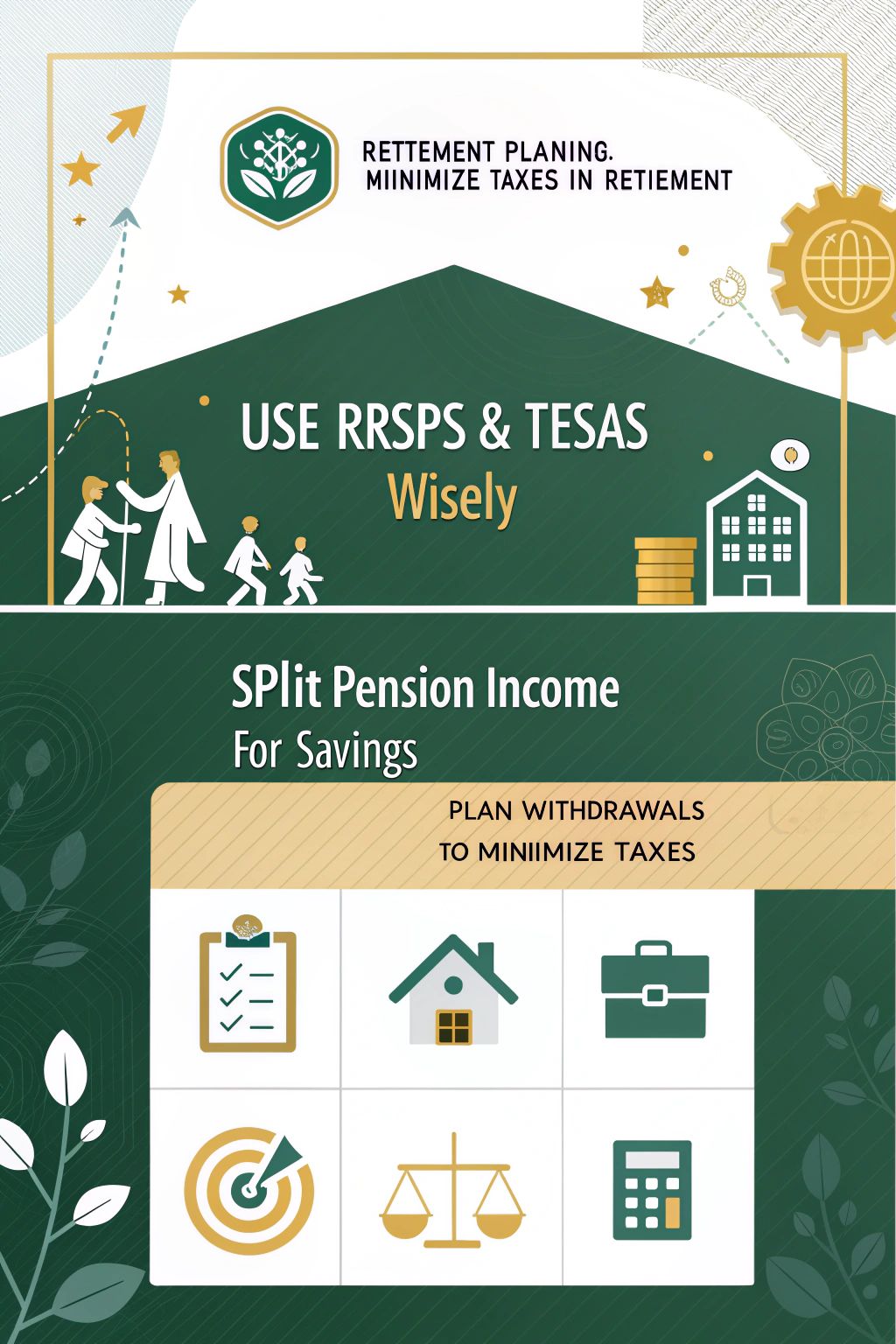
- Use RRSPs and TFSAs: Save money with Registered Retirement Savings Plans (RRSPs) and Tax-Free Savings Accounts (TFSAs). Withdraw from your TFSA for tax-free income.
- Split Pension Income: Share up to 50% of pension income with your spouse. This helps keep both in lower tax brackets.
- Plan Withdrawals Wisely: Take out small amounts each year to stay in a low tax bracket. Avoid big withdrawals that push you into higher rates.
- Claim Tax Credits: Use non-refundable credits like age amount or pension income credit to reduce taxes owed.
- Consult an Advisor: Speak to a financial advisor. They help you plan the best way to withdraw funds while paying less tax.
Understanding Retirement Income Types
Your retirement income can come from various sources, each with its own tax implications. Being aware of these helps you plan better and save more in the long run.
Registered Retirement Savings Plans (RRSPs)
Registered Retirement Savings Plans (RRSPs) are a great way to save for retirement. Contributions reduce taxable income, helping you save on taxes now. Income in RRSPs grows tax-free as long as funds stay in the plan. 1 But be careful—withdrawals get taxed like regular income.
“If you withdraw early, you may face penalties.”
Specific rules apply if the account holder dies. The government wants to stop aggressive tax planning with anti-avoidance rules. These protect against misuse of RRSPs for tax evasion purposes.
Tax-Free Savings Accounts (TFSAs)
Tax-Free Savings Accounts (TFSAs) let you save money without paying tax. In 2024, the contribution limit is $7,000 per year. 2 You can invest in cash, stocks, bonds, mutual funds and GICs.
Withdrawals are not taxed and do not affect government benefits. 2
Non-residents pay a monthly tax of 1% on any contributions they make to TFSAs. Any withdrawals add back to your contribution room for the next year. This helps keep saving simple and flexible for your retirement planning.
Pension Plans and Annuities
Pension Plans give steady income in retirement. Income is taxable under Line 11500. Pension benefits can come from your work or private plans you buy yourself.
Annuities also provide guaranteed payments for life. You choose types like fixed, variable, and indexed annuities. Fixed annuities promise regular payouts and interest rates that don’t change.
Financial advisors can help pick the best type for your needs. 3
Strategies for Minimising Taxes in Retirement
Discover actionable steps to make your retirement funds go further. Learn how to optimise withdrawals and explore income splitting for greater tax efficiency.
Optimal Withdrawal Strategies from RRSPs and TFSAs
You’ve worked hard and saved money for retirement. Now, the goal is to minimise taxes on those hard-earned savings.
- Plan Your Withdrawals
- Start by withdrawing from your RRSP when your income is lower. This helps in staying within tax bracket limits. 4
- Use TFSAs for tax-free withdrawals. There’s no additional tax on the money you take out.
- Pension Splitting
- If possible, split pension income with your spouse or partner to reduce overall taxes owed.
- Both can benefit by staying in lower tax brackets.
- Use Tax Credits
- Claim all available non-refundable tax credits to reduce tax payable.
- Credits like age amount or pension income amount can save you more money.
- Watch Your Bracket
- Try not to withdraw too much at once from your RRSP or other taxable accounts.
- Keep withdrawals within a comfortable tax bracket to avoid a big jump in taxes owed.
- Consult an Advisor
- Speak to a financial advisor about the best strategy for your personal situation. 4
- An expert can help plan the most efficient way to withdraw funds while paying less tax.
Facts:
- Withdrawing in small amounts keeps you in a lower tax bracket.
- TFSA withdrawals are always tax-free.
- Make use of unused income from high-earning years contributed to TFSAs to maximise benefits fully.
Planning smartly now will keep more money in your pocket during retirement… Happy planning!
Pension Income Splitting
Splitting pension income can save you money on taxes. It lets married couples share up to 50% of their eligible pensions. This way, both partners may stay in a lower tax bracket. Lower brackets mean less tax. 5
Professional advice helps you do this right. Tailored strategies fit your needs best. Using Line 22100, claim carrying charges and interest charges to reduce taxable income further.
Income splitting is a smart way for retirees to manage taxes, says Jane, a financial adviser.
Spreading withdrawals over many years also keeps the total tax bill low. 6 One more tip: Take out the 25% lump sum that’s free from tax first!
Utilising Non-Refundable Tax Credits
After dividing pension income, you can also use non-refundable tax credits to cut down your taxes. These credits lower the amount of tax you owe but won’t give a refund if they are more than your tax owed. 8
Claim the age amount if you’re 65 or older. It’s a big help for seniors. Also, use the pension income amount to reduce taxable income from pensions or annuities. If one spouse has unused credits, transfer them—this can save money too!
Don’t forget Line 22100! Deduct carrying charges and interest expenses here. Some old excess contributions (1976-1985) can be deducted as well… Provincial and territorial deductions matter too; check what’s available in your area! 7
Planning for Tax Efficiency
4. Planning for Tax Efficiency: Discover how to make each dollar of your retirement income go further by timing withdrawals and managing tax brackets effectively… read more to unlock these secrets!
Timing of Withdrawals
Timing of withdrawals can make a big difference in your taxes. Plan well to save more money.
- Understand RMDs:
- Withdraw funds before you must take Required Minimum Distributions (RMDs). 9
- Avoid higher tax rates forced by large withdrawals.
- Keep Income Steady:
- Take out the same amount yearly to stay in lower tax brackets.
- Check last year’s income to decide how much to withdraw this year. 8
- Check Tax Rates:
- Look at current and future tax rates.
- Choose years with lower rates for bigger withdrawals.
- Avoid Big Jumps in Income:
- Large withdrawals can push you into higher tax brackets.
- Spread out withdrawals over many years.
- Work with a Financial Advisor:
- Get advice on the best withdrawal strategy for your needs.
- A good advisor helps keep taxes low and income steady.
- Use Non-Refundable Tax Credits:
- Apply credits where possible to reduce taxes owed.
- Think about medical expenses, donations, or age amounts.
Planning these moves can help keep your taxes down and make retirement smoother…
Managing Tax Brackets
Managing tax brackets is key to saving on taxes in retirement. Here are some steps to help you manage your tax brackets:
- Know Your Tax Brackets: Canada has seven federal tax brackets. Each bracket has different rates. Knowing these can help you plan. 10
- Time Your Withdrawals: Take money out of your RRSPs and TFSAs at the right time. This can help you stay in a lower tax bracket.
- Use Non-Refundable Tax Credits: Use credits like the age amount credit or pension income credit to reduce taxes.
- Split Income with Spouse: Share pension income with your spouse. It can lower both your tax bills.
- Combine Deductions in High-Income Years: Make big deductible payments when your income is high to get bigger tax savings.
- Use Roth Conversions for Tax Efficiency: Convert traditional retirement accounts to Roth accounts for long-term savings on taxes.
- Focus on Lifetime Tax Minimisation, Not Just One Year: Plan so that you pay less tax over your whole life, not just one year.
Planning for tax efficiency…
Considerations for Non-Resident Taxation
Non-resident retirees face unique tax rules. Each country has its own tests to define tax residency. This can affect your taxes a lot. For example, expats from the United Kingdom may still owe inheritance tax based on where their assets are. 11
Meeting expatriate tax obligations is crucial. Getting professional advice helps you navigate these complex issues and ensures a smooth move abroad… Don’t overlook financial optimisation opportunities when planning for international tax rules! 12
Conclusion
Retirement planning can help you save on taxes. Understand your income types and plan wisely. Use the tips we discussed for tax efficiency. Stay aware, make smart moves…and enjoy your golden years!
FAQs
1. How can I minimise taxes in retirement?
You can minimise taxes by using tax-efficient accounts, such as ISAs and pensions. Also, consider withdrawing funds strategically to stay within lower tax brackets.
2. What are some common misconceptions about retirement planning?
Many people think they won’t need as much money in retirement or that state pensions will cover all their needs—these beliefs often lead to under-saving.
3. Is it important to start planning for retirement early?
Yes! The earlier you start, the more time your investments have to grow… which means less stress later on.
4. Can data-driven insights help with my retirement plan?
Absolutely! Data-driven analysis helps identify trends and provides a clear picture of your financial future… ensuring you make informed decisions.
References
- ^ https://www.canada.ca/en/revenue-agency/services/tax/individuals/topics/rrsps-related-plans/registered-retirement-savings-plan-rrsp.html (2024-01-15)
- ^ https://www.canada.ca/en/revenue-agency/services/forms-publications/publications/rc4466/tax-free-savings-account-tfsa-guide-individuals.html
- ^ https://www.moneyhelper.org.uk/en/pensions-and-retirement/taking-your-pension/guaranteed-retirement-income-annuities-explained
- ^ https://www.canadalife.com/investing-saving/retirement/preparing-for-retirement/tax-effficient-withdrawal-strategies.html (2023-10-23)
- ^ https://www.charles-stanley.co.uk/insights/commentary/how-to-pay-less-tax-in-retirement
- ^ https://www.bbtgroup.co.uk/strategies-to-minimise-retirement-tax/
- ^ https://www.ageuk.org.uk/siteassets/documents/factsheets/fs12_planning_your_retirement_money_and_tax_fcs.pdf
- ^ https://www.brewin.co.uk/insights/four-steps-to-tax-efficient-retirement-income
- ^ https://www.financialplanningassociation.org/sites/default/files/2021-02/APR12%20Tax-Efficient%20Retirement%20Withdrawal%20Planning%20Using%20a%20Comprehensive%20Tax%20Model.pdf
- ^ https://www.thetaxadviser.com/issues/2017/dec/managing-tax-brackets-retirement.html
- ^ https://www.soteriatrusts.com/insights/british-expats-tax-efficient-retirement/
- ^ https://www.blevinsfranks.com/planning-a-tax-efficient-return-to-the-uk/


